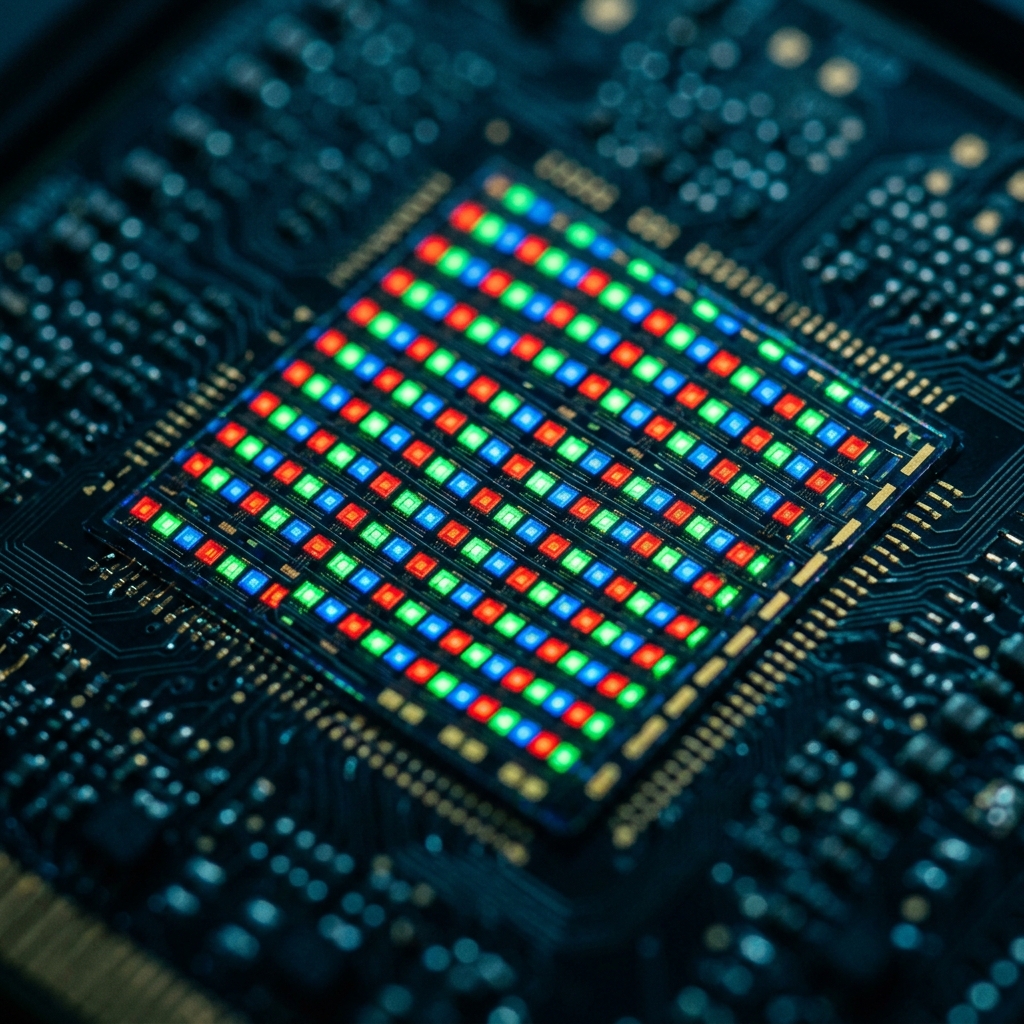
The Tiny Square That Makes Everything
Every photo you've ever double-tapped on Instagram, every YouTube thumbnail that made you click, every Netflix frame that blew your mind... it's all made of pixels. Millions and millions of tiny colored squares arranged in a grid, fooling your eyes into seeing continuous images.
The word "pixel" comes from "picture element." That's literally all it is: the smallest piece of a digital image. Simple concept, massive implications.
Okay But How Does a Camera Use Pixels?
On your camera's sensor, each pixel is actually a photosite. Think of it as a tiny bucket that catches photons (light particles). When you press the shutter, light floods in, hits these buckets, and generates an electrical charge. More light = stronger charge. The camera then reads all these charges, processes them, and boom: you have an image.
A 24-megapixel camera has literally 24 million of these light buckets. That's... a lot of buckets. Each one contributing a tiny piece of color information to your final photo.
The Megapixel Myth (Don't Fall for It)
Here's where most people get it wrong. Samsung drops a 200MP phone camera and everyone loses their mind. "200 megapixels! It must be amazing!" Not necessarily, bhai.
Pixel quality beats pixel quantity every single time. Here's why:
- Bigger pixels catch more light. A 12MP full-frame sensor can produce cleaner images than a 108MP phone sensor because each pixel on the full-frame is physically massive in comparison
- When you cram too many pixels onto a tiny sensor, they get noisy, especially in low light. It's like trying to fit 200 people in a room meant for 20. Things get messy
- There's a reason the Sony A7S III "only" has 12.1MP but shoots the best low-light video in the business. Bigger pixels, less noise, more light gathering power
The Bayer Pattern (Nerdy but Cool)
Here's a fun fact: each photosite on your sensor can only see ONE color. Red, Green, or Blue. It can't see full color on its own. So cameras use something called a Bayer filter, a checkerboard pattern of RGB filters over the sensor. Green gets double the spots because our eyes are most sensitive to green.
The camera's processor then does some seriously clever math called "demosaicing" to guess the missing colors and build a full-color image. Yes, your expensive camera is basically guessing 2/3 of the color information. Wild, right?
Where Pixel Tech is Heading
Modern sensors are getting really sci-fi. Sony's stacked sensors read data ridiculously fast. Some cameras use "quad pixel" designs where four photosites work together for better autofocus. Dual-gain technology gives you extended dynamic range by reading each pixel at two different sensitivity levels simultaneously.
The humble pixel is evolving from a simple light catcher into something genuinely impressive. And now you know more about pixels than 99% of people who argue about megapixels on Twitter. You're welcome.