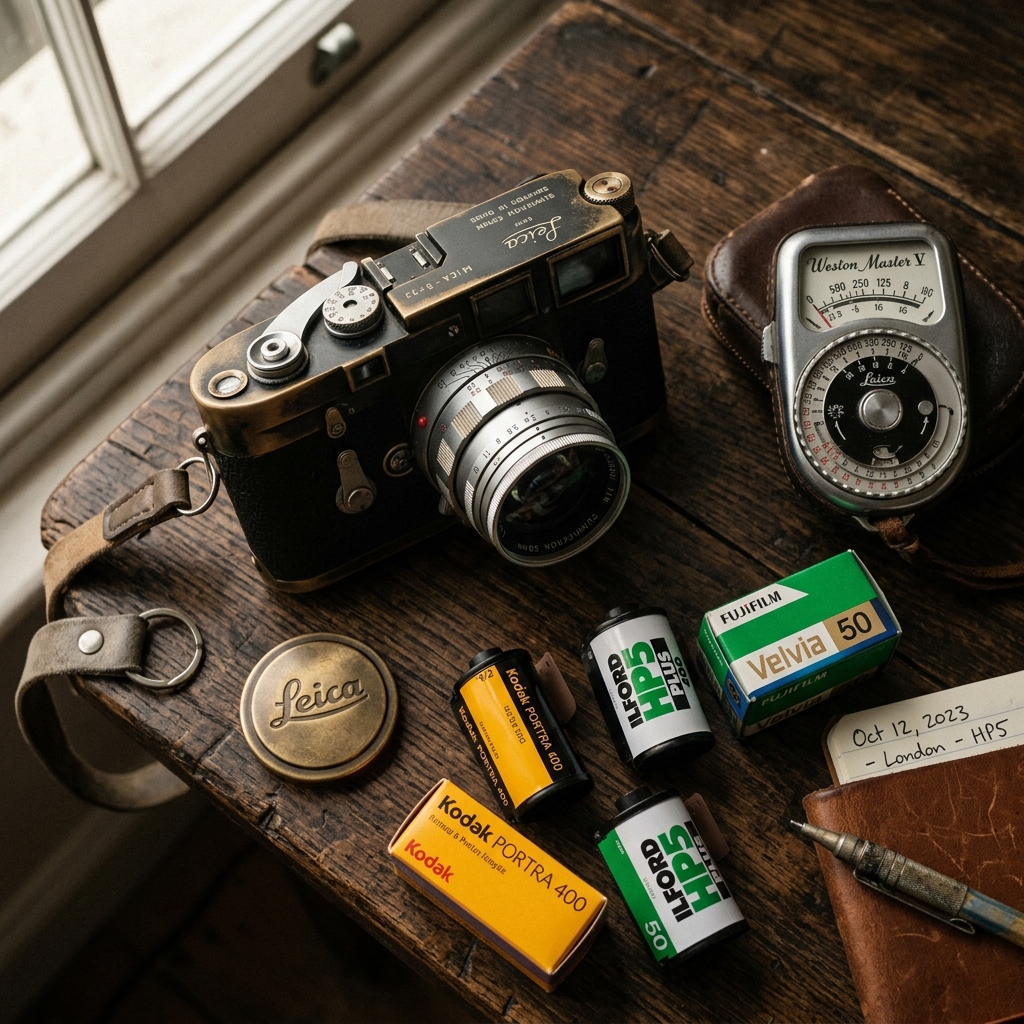
The Holy Trinity of Photography
If someone asks me "what's the ONE thing I need to learn to get better at photography?", it's always the same answer: the exposure triangle. It's not glamorous. It's not exciting. But it's the foundation of literally everything you do with a camera.
Three things control how bright or dark your image looks: aperture, shutter speed, and ISO. Change one, and you need to adjust the others to compensate. That's it. That's the triangle. Simple concept, lifetime to master.
Aperture - How Wide is the Door?
Aperture is the opening in your lens. Think of it like the pupil of your eye. In bright sunlight, your pupil gets tiny. In a dark room, it opens wide. Your lens aperture works the exact same way.
Here's the confusing part: a lower f-number means a WIDER opening. f/1.4 is huge (lots of light, blurry background). f/16 is tiny (less light, everything sharp). Yeah, it's backwards. Don't ask me why. Just accept it.
That creamy blurred background in portrait photos? That's called bokeh, and it happens at wide apertures like f/1.4 or f/2.8. It's why portrait photographers obsess over "fast" lenses. That background blur makes your subject pop.
Quick tip from personal experience: I once shot an entire outdoor event at f/1.4 because I wanted that "cinematic look." Half the photos were out of focus because the depth of field was paper thin. Don't be like me. Use f/2.8-f/4 for events. Trust me on this one.
Shutter Speed - How Long is the Door Open?
Shutter speed is exactly what it sounds like: how long the sensor is exposed to light. Fast shutter (1/1000s) freezes a cricket ball mid-air. Slow shutter (1/30s or slower) turns a waterfall into silk.
For video people: there's a thing called the 180-degree shutter rule. Set your shutter speed to double your frame rate. Shooting at 24fps? Use 1/50. Shooting at 60fps? Use 1/120. This gives you natural-looking motion blur that your brain expects to see. Break this rule and your footage will look either too choppy or too smooth, and viewers will feel something is "off" without knowing why.
ISO - The Sensitivity Dial
ISO controls how sensitive your sensor is to light. Low ISO (100-400) = clean, sharp, beautiful images. High ISO (6400+) = brighter image but with noise/grain.
Modern cameras handle high ISO way better than they used to. The Sony A7S III can shoot at ISO 12800 and the footage looks remarkably clean. But on my first camera (a Canon 1300D), anything above ISO 800 looked like someone sprinkled sand on the image. Technology, man.
The Balancing Act
Here's the dance: open the aperture wider for more light but get a shallower depth of field. Slow the shutter for more light but risk motion blur. Crank the ISO for more light but introduce noise. Every shooting situation is a puzzle, and the exposure triangle is how you solve it.
The difference between someone who takes photos and a photographer? The photographer can solve this puzzle instinctively, in seconds, in any lighting condition. And the only way to get there is practice. Lots and lots of practice.