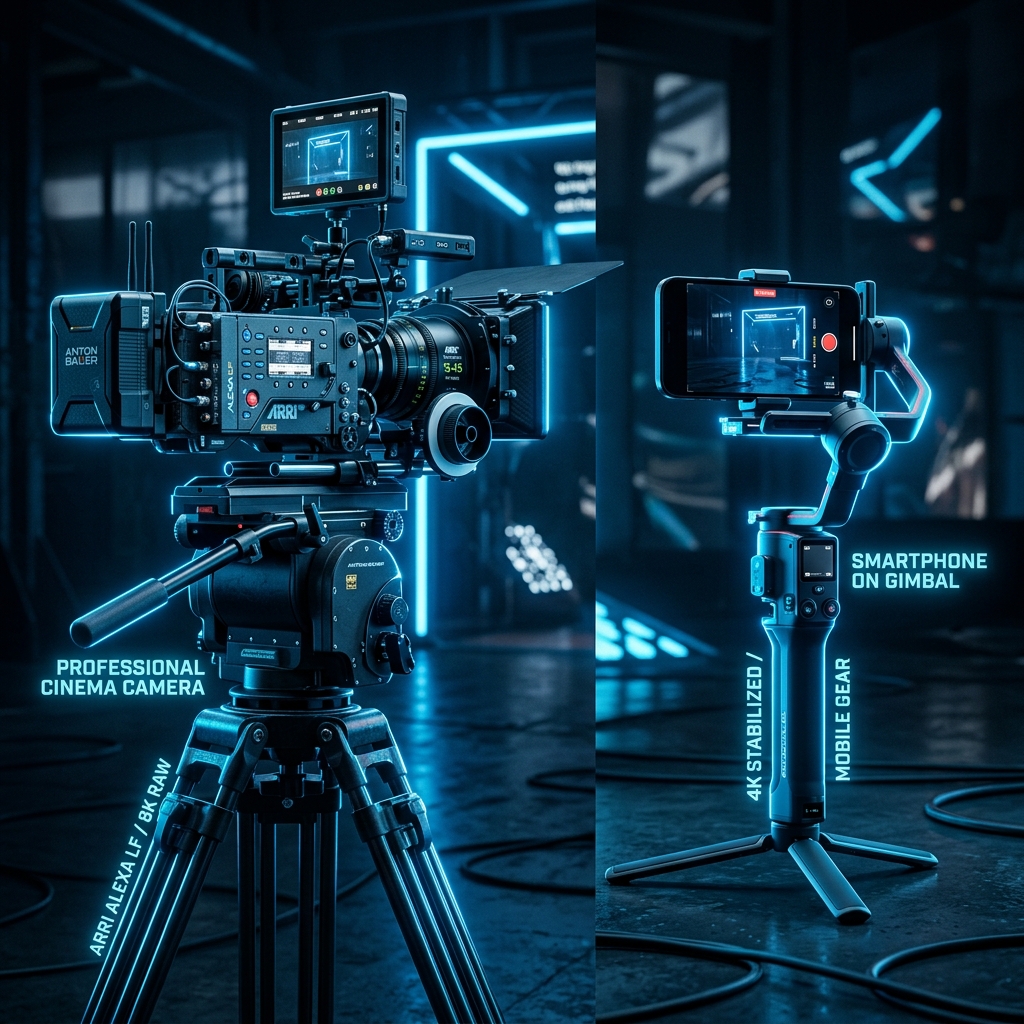
Is Professional Gear Dead?
Let me be honest. Every time someone pulls out their iPhone 15 Pro and shoots a cinematic video at 4K, a small part of me dies inside. Not because it looks bad (it looks incredible, actually), but because I spent lakhs on my camera gear and this dude just pulled a better vlog out of his pocket.
Okay, I'm being dramatic. But the question is real: in a world where your phone can shoot 8K video, do we still need professional cameras?
The Smartphone Revolution (It's Real)
Let's give credit where it's due. Modern smartphones are absolute beasts. The iPhone, Samsung Galaxy Ultra, Google Pixel... these things have multi-lens systems, Night Mode, computational photography, and software processing that would make a 2015-era DSLR jealous.
Computational photography is the real game-changer here. It's basically AI + hardware working together to overcome the physical limitations of a tiny sensor. Your phone takes 12 photos in a split second, stacks them together, runs them through machine learning algorithms, and spits out an image that honestly looks better to most people than a photo from a Rs 2 lakh camera.
I've had clients ask me "can't you just shoot it on the phone?" more times than I'd like to admit. And sometimes... honestly? For social media content, you can.
Where Pro Cameras Still Win (And Always Will)
But here's what your phone can never do:
- Sensor Size: Physics doesn't lie. A full-frame sensor is literally 30x bigger than your phone's sensor. More surface area = more light = better dynamic range and low-light. Try shooting a dimly lit wedding reception on your phone vs a Sony A7IV. No contest
- Interchangeable Lenses: I can slap a 50mm f/1.2 on my camera and get real optical bokeh that no amount of Portrait Mode can fake. Try using a 200mm telephoto on your phone... oh wait, you can't
- LOG Profiles: Cinema cameras shoot in flat color profiles with 13+ stops of dynamic range. This gives us insane flexibility in color grading. Phone footage? What you see is basically what you get
- Reliability: My Sony FX3 can shoot all day without overheating. A phone shooting 4K? Give it 15 minutes and it becomes a literal toaster
The Real Answer
It's not phones VS cameras. It's phones AND cameras. I use my phone for behind-the-scenes content, Instagram Stories, and location scouting. But when I'm shooting a music video, a corporate film, or anything that needs to look truly cinematic, there's no replacement for dedicated gear.
The best camera is the one you have with you. But the best results come from the right tool for the right job. Period.
What's Coming Next?
Honestly, the future is exciting for both sides. AI will eventually come to mirrorless cameras too (imagine real-time subject tracking powered by machine learning). And phones will keep getting better sensors and adding more lenses. The creators who thrive will be the ones who know how to use both, not the ones picking sides in a pointless debate.
Professional gear isn't dying. It's evolving. And if you care about the absolute best quality, creative control, and reliability? A dedicated camera will be your best friend for a long, long time.