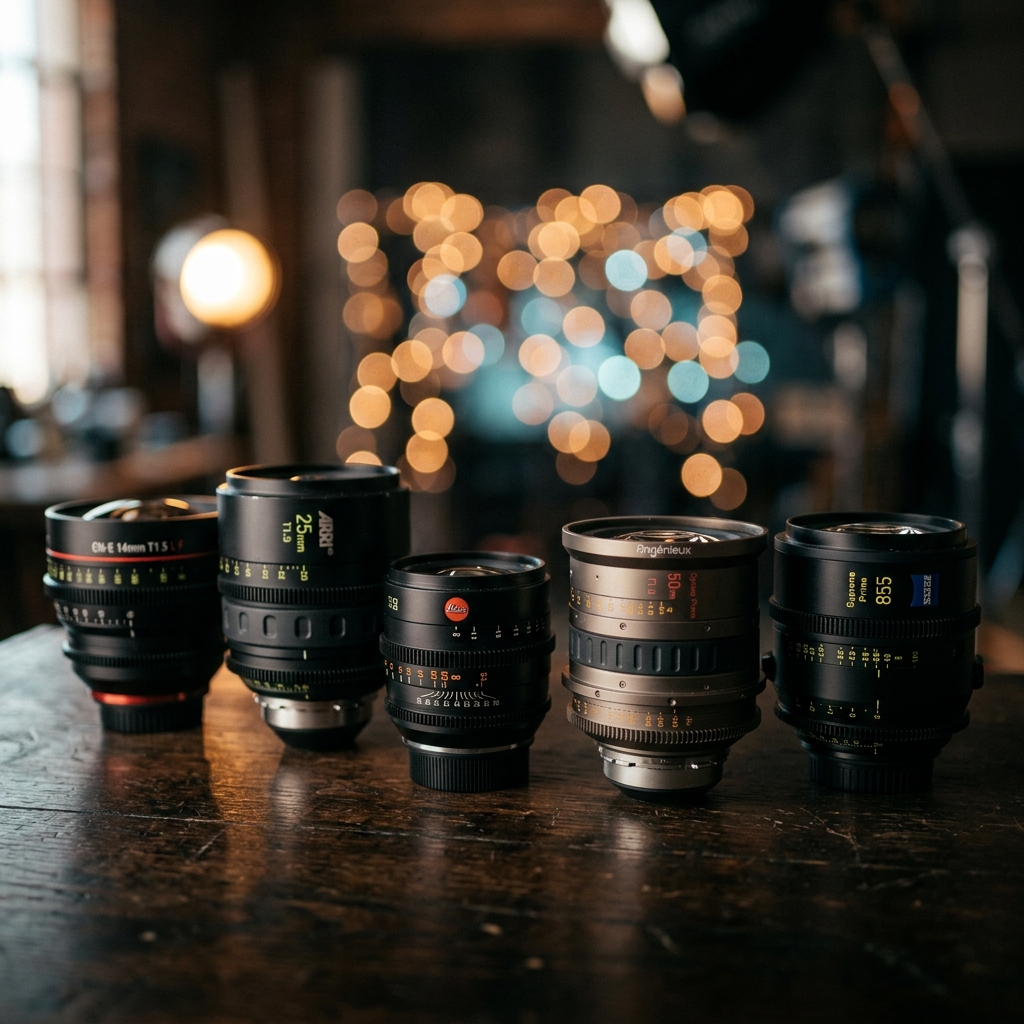
Your Camera is Useless Without the Right Glass
Hot take: the lens matters more than the camera body. You can put a great lens on a mediocre camera and get stunning results. Put a kit lens on the best camera in the world and... well, it'll still look like a kit lens shot.
So let's figure out what all these numbers mean and how to choose the right lens without needing a finance degree.
Focal Length: The Only Number That Matters
Focal length (measured in mm) basically tells you how "zoomed in" your view is. The lower the number, the wider the view. Higher number = more telephoto (zoomed in).
- 14-35mm (Wide-angle): Captures a huge field of view. Great for landscapes, real estate, and that "look at this entire beautiful place" vibe. The 24mm is my go-to for travel
- 35-70mm (Standard): Closest to what your eye actually sees. The 50mm is called the "nifty fifty" for a reason. It's versatile, affordable, and produces great results. If you own one lens, make it a 50mm
- 70-200mm (Telephoto): For when you can't (or shouldn't) get closer. Sports, wildlife, and those beautiful compressed portrait shots. Every wedding photographer carries a 70-200mm. No exceptions
- 200mm+ (Super Telephoto): For wildlife photographers and cricket match shooters. Also paparazzi, but we don't talk about that
Prime vs Zoom: The Eternal Debate
Prime lenses have one fixed focal length (e.g., 50mm). They're typically sharper, let in more light (faster aperture), and are lighter. The downside? You zoom with your feet.
Zoom lenses offer a range (e.g., 24-70mm). Super versatile, great when you can't move around, but usually a bit bigger and heavier. And the maximum aperture is often smaller.
My personal preference? Primes for creative work and cinematic video. Zooms for events and situations where I need versatility and speed. Most working professionals carry both.
Aperture: The "Speed" of a Lens
A lens with f/1.4 or f/1.8 is called "fast" because it can let in a ton of light, meaning you can shoot in darker conditions with faster shutter speeds. The trade-off? Fast lenses are expensive. A 50mm f/1.2 can cost more than some camera bodies.
But that background blur (bokeh) at f/1.4? *Chef's kiss*. It makes your subject pop like nothing else. For portraits, it's basically mandatory.
My Starter Kit Recommendation
If I were starting over with a limited budget, I'd grab three lenses: a 24-70mm f/2.8 for everyday versatility, a 50mm f/1.8 for portraits and low light (seriously, these are so cheap, just buy one), and maybe a 85mm f/1.8 for that portrait magic. That covers about 90% of shooting situations.