Introduction
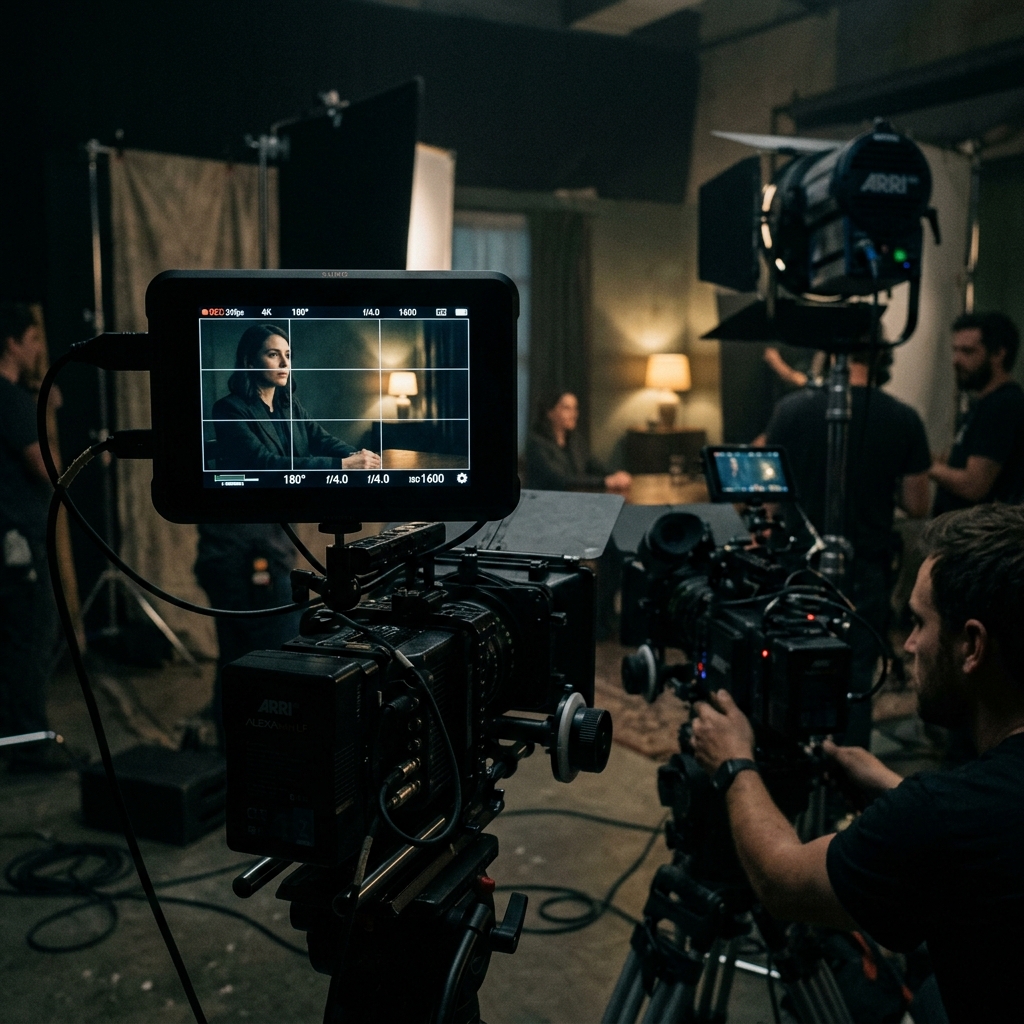
Here's the thing about filmmaking that most people don't get: framing and composition aren't just about making things "look pretty." They're your storytelling weapons. While a photographer freezes one perfect moment, a filmmaker strings together hundreds of carefully composed frames to carry the audience through an entire emotional journey.
Think about it. Every time a character walks into frame from the left, every time the camera slowly pushes in during a tense dialogue, every time the horizon sits on the lower third of the screen... those are deliberate choices. And they hit you emotionally whether you realize it or not.
Power of Close-ups
If there's one shot that separates cinema from home videos, it's the close-up. Nothing creates intimacy like filling the entire frame with someone's face. You see the sweat, the micro-expressions, that tiny twitch in the eye before someone lies.
Remember the final scene in Sholay where Gabbar's eyes fill the screen? Or that iconic shot of Heath Ledger's Joker leaning out of the police car window in The Dark Knight? Those close-ups didn't just show you a face. They pulled you into the character's soul. That's what a well-timed close-up does - it forces connection.
Pro tip: use close-ups sparingly. If everything is a close-up, nothing is. Save them for the moments that actually matter.
The Establishing Shot - Setting Up the Scene
Every great scene starts with context. Where are we? What time is it? What's the vibe? That's exactly what an establishing shot does. It's the wide or long shot that grounds your audience before the story zooms into specifics.
Think of the first shot of Hogwarts in any Harry Potter film. Before a single word of dialogue, you already know you're in a magical world. The establishing shot did all that heavy lifting. Without it, audiences spend the first few seconds of every scene confused, trying to figure out where the action is happening instead of following the story.
I've learned the hard way that skipping establishing shots makes your edit feel choppy. It's like starting a conversation mid-sentence. Don't do that to your audience.
Balanced Composition
How you arrange elements in a frame has a massive impact on how people feel watching it. Symmetrical compositions feel ordered, calm, maybe even a bit unsettling (Wes Anderson built an entire career on perfectly centered shots). Asymmetrical compositions create tension, draw the eye, and feel more dynamic.
Next time you watch a thriller, notice how the framing gets more lopsided as the tension builds. The character starts drifting to the edge of the frame. Empty space appears where it shouldn't. Your brain picks up on this stuff subconsciously, and it works every single time.
Dynamic Framing with Camera Movements
This is where filmmaking gets really fun compared to photography. Your frame can move. Tracking shots, dolly zooms, handheld shaky cam, steadicam walks, you name it. Each one tells a different story.
Handheld = chaos, urgency, raw energy. Think of the Bourne movies. Steadicam = smooth, controlled, sometimes eerie. Remember Danny riding his tricycle through the Overlook Hotel in The Shining? Perfect steadicam work.
My favourite example? The song "Gallan Goodiyan" from Dil Dhadakne Do, shot in a single take. The camera moves through the entire party sequence without a single cut. Absolute gold.
Rule of Thirds in Motion
You probably already know the rule of thirds from photography. Put the interesting stuff on the intersecting lines, not dead center. In filmmaking, the exact same principle applies, but now your subjects are moving.
As a character walks through frame, their position in the thirds grid tells a story. A hero walking confidently might stick to the power zone (right third, heading left). A character who feels lost might drift into empty space. It's subtle, but your audience reads these cues without even knowing it.
Depth and Perspective: The Z-Axis
Here's something photography can't really do the same way: depth. By placing elements in the foreground, midground, and background, you create a three-dimensional world on a flat screen. Your audience's eyes travel through the frame, discovering layers.
In "Tumbbad" (2018), the deep focus shots in the treasure cave scenes are a masterclass. Multiple layers of depth create tension and mystery that a flat composition never could. If you haven't watched it, stop reading this and go watch it right now.
Wrapping Up
Framing and composition aren't just fancy filmmaking words. They're the tools you use to control what your audience sees, feels, and thinks about every single second of your film. Master them, and you'll tell stories that stick with people long after the credits roll.
Lighting and framing are the backbone of any movie. Get these right, and even a simple scene becomes cinematic. Get them wrong, and no amount of VFX can save you.